Basic knitting stitches are the true foundation of everything you’ll ever make with yarn and needles. Before you can knit a cozy scarf, a warm hat, or even a simple dishcloth, you need to understand these core stitches.
The good news? There are only a handful of stitches you really need to know as a beginner. Master those, and an entire world of easy knitting patterns opens up to you.
Why Learning Basic Knitting Stitches Matters So Much
Think of basic knitting stitches as your alphabet. Just like you can’t write words without knowing your letters, you can’t knit anything without knowing your stitches. They are the building blocks of every single project.
Once you’re comfortable with the basics, reading knitting patterns becomes so much easier. You’ll recognize the abbreviations, understand what’s being asked, and spend less time confused and more time actually knitting.
The Knit Stitch: The First One Every Beginner Learns
The knit stitch is the most fundamental of all basic knitting stitches. It creates a smooth, flat texture on the front of your fabric, which is why it’s often the very first thing beginners are taught.
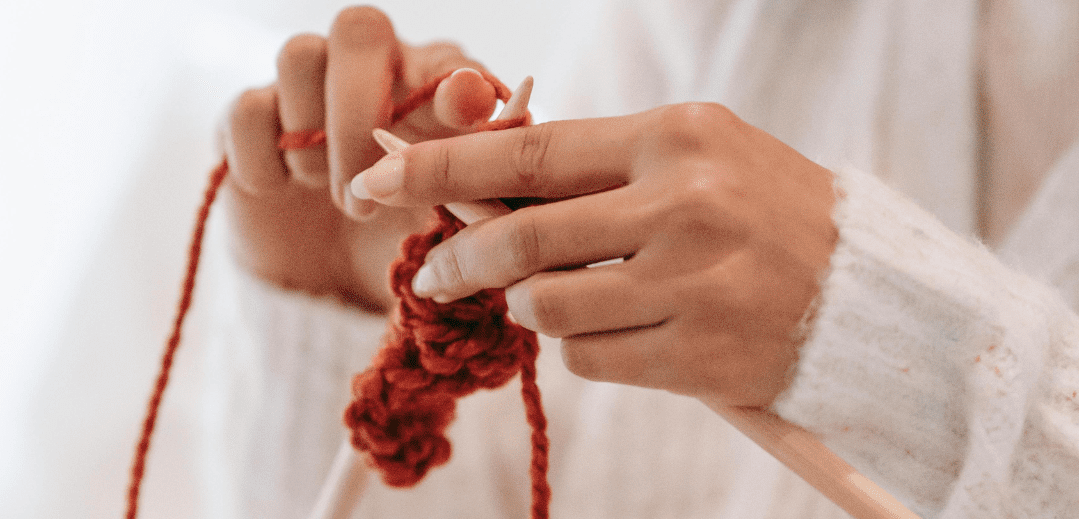
To work a knit stitch, you insert the right needle into the front of the stitch on the left needle, wrap your yarn around, and pull it through. It sounds tricky at first, but after a few rows, your hands start to remember the motion naturally.
The Purl Stitch: The Knit Stitch in Reverse
Once you’ve got the knit stitch down, the purl stitch is your next essential skill. It’s essentially the mirror image of the knit stitch, and it creates a bumpy, raised texture on your fabric.
The purl stitch might feel a little awkward at first most beginners find it slightly harder than the knit stitch. But with a bit of practice, it becomes just as easy. And once you can knit and purl, you can create almost any knitting pattern out there.
Garter Stitch: The Easiest Texture to Create
When you knit every single row without purling, you get the garter stitch. It’s one of the simplest and most beginner-friendly knitting stitches you’ll ever use, creating a ridged, squishy texture that looks great on scarves and dishcloths.
Garter stitch is also very forgiving it doesn’t curl at the edges like some other stitch patterns do. That makes it perfect for flat projects where you want clean, tidy sides without any extra finishing work.
Stockinette Stitch: The Classic Knitting Pattern
Stockinette stitch is what most people picture when they think of knitted fabric smooth V-shaped stitches on the front and a bumpy texture on the back. It’s created by alternating one knit row and one purl row.
This is one of the most widely used basic knitting stitches in patterns for sweaters, hats, and socks. The only thing to know is that stockinette tends to curl at the edges, so many patterns use a border of garter or ribbing to keep it flat.
Ribbing: Perfect for Stretchy Edges
Ribbing is a combination of knit and purl stitches worked in the same row. The most common version is K1, P1 (knit one, purl one) or K2, P2 (knit two, purl two). This creates a stretchy, textured fabric that bounces back into shape.
You’ll see ribbing at the cuffs, collars, and hems of almost every knitted garment. It’s one of those basic knitting stitches that beginners learn early and use forever. Once you try it, you’ll understand why it’s so popular.
Seed Stitch: A Beautiful Textured Option
Seed stitch alternates knit and purl stitches in a specific way so that the bumps and smooth stitches never line up. The result is a pebbly, textured fabric that looks incredibly detailed but is actually very simple to knit.
It’s a fantastic stitch for borders, blankets, and accessories. If you want your projects to look a little more polished without using complicated knitting stitches, seed stitch is the perfect next step after garter and stockinette.
How These Stitches Work Together in Real Patterns
Most beginner and intermediate patterns are built entirely from the stitches listed above. Once you can knit and purl confidently, you’ll find that even patterns that look complex are just combinations of these basics in different orders.
If you’re ready to put these stitches into practice, start with a simple project. A full walkthrough of how to use these stitches from cast on to bind off is available here: How to Knit for Beginners – Learn the 3 Essential Stitches Today.
Common Mistakes When Learning New Stitches
One of the most common issues beginners face is accidentally adding or dropping stitches mid-row. This usually happens when the yarn gets wrapped around the needle without meaning to, or when a stitch slips off without being worked.
Counting your stitches at the end of every row is the simplest way to catch mistakes early. You can also learn how to fix the most common errors before they become big problems: Common Knitting Mistakes Beginners Make and How to Fix Them.
Getting Started: Cast On Before Your First Stitch
Before you can practice any of these basic knitting stitches, you need to get your yarn onto the needle. This process is called casting on, and choosing the right method makes a real difference in how your project starts.
The long tail cast on is one of the most popular choices because it’s fast and creates a neat, stretchy edge. You can find a complete tutorial here: Knitting Cast On – Long Tail Complete Guide.
Your Next Step: Practice Makes Perfect
The only real way to get comfortable with basic knitting stitches is to practice them a lot. Cast on a small swatch, work through each stitch, and don’t worry about making it perfect right away. Every row teaches you something new.
If you’re just getting started and want a complete overview of the craft, check out the full beginner’s guide: Knitting for Beginners – Your Easy Start Guide. It covers everything from choosing your first needles to finishing your first project.
The stitches you learn today are the ones you’ll use for years to come. Start simple, stay consistent, and enjoy every stitch of the journey. 🧶