
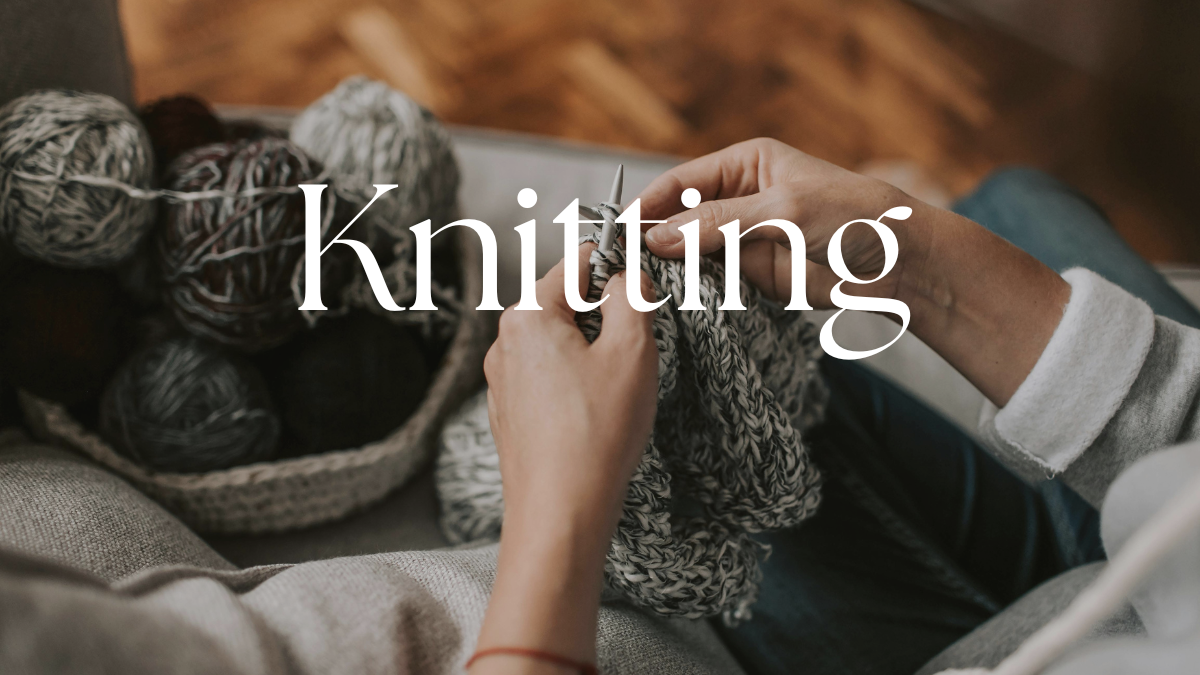
A step-by-step guide to the three most beginner-friendly cast on methods — Long Tail, Knitted, and Single Cast On so you can start any knitting project with a solid, even foundation
How to cast on knitting is the very first skill every knitter must learn and it is far simpler than most beginners expect. Casting on means creating the initial row of loops on your needle that forms the foundation of every stitch you will ever knit. Without a solid cast on, nothing else works. Think of it as laying the first brick of a wall: get it right, and everything builds steadily on top.
In this step-by-step guide, you will learn three of the most popular and beginner-friendly cast on methods: the Long Tail Cast On, the Knitted Cast On, and the Single Cast On. By the end, you will know exactly which one to choose for your first project and every project after that.
What Does “Cast On” Mean in Knitting?
To cast on in knitting means to place a set number of loops — called stitches — onto your needle before you begin working. These stitches determine the starting width of your piece. Casting on also creates the bottom edge of your knitted fabric, the part you see at the hem of a sweater, the cuff of a sock, or the border of a dishcloth. Different methods create different types of edges: some stretchy, some firm, some decorative.
A common beginner question: does the cast on row count as row one? In most patterns, it does not. The cast on is treated as the foundation, and row counting begins with the first actual knit row. Always check your specific pattern, but as a general rule, once you finish casting on, you flip your work and start row one fresh.
What You Need Before You Cast On
Before casting your first stitch, you need two things: yarn and needles. For beginners, medium-weight worsted or aran yarn is ideal — thick enough to see every stitch clearly, forgiving enough to fix mistakes easily. Choose a smooth, light-coloured yarn so you can count stitches without squinting. Avoid fuzzy or novelty yarns for now, as they make it nearly impossible to identify individual stitches.
For needles, bamboo or wooden straight needles in size US 7 to US 9 (4.5mm to 5.5mm) are the top recommendation for beginners. Unlike metal needles, bamboo grips the yarn slightly, which prevents stitches from sliding off accidentally while you are still finding your rhythm. Check the label on your yarn ball — it will recommend a needle size. One pair of needles and one ball of yarn is genuinely all you need to start.
Method 1: Long Tail Cast On (Best All-Purpose Method)
The Long Tail Cast On is the most widely used cast on method in the world. It is fast, creates a beautiful elastic edge, and once you get the rhythm, it feels completely natural. Most experienced knitters use this method automatically for the majority of their projects — scarves, hats, sweaters, socks — because it works brilliantly across virtually every yarn weight and project type.
Before you begin, measure your yarn tail. Allow approximately one inch of tail per stitch, plus an extra six to eight inches as a buffer. For 40 stitches, pull out roughly 48 inches of yarn. When in doubt, go longer — a slightly extra-long tail is trimmed in seconds, while a short tail means starting over entirely.
Step-by-Step: Long Tail Cast On
- Make a slip knot at your measured tail length and place it on your needle — this is stitch one.
- Hold the needle in your right hand. Drape the tail over your left thumb and the working yarn over your left index finger. Grip both strands against your palm with your remaining fingers.
- Spread your thumb and index finger apart to form a V shape — knitters call this the slingshot position.
- Bring the needle tip down and under the loop around your left thumb, scooping from below.
- Swing the needle tip up and over the yarn on your index finger, catching it and pulling it back through the thumb loop.
- Slip your thumb out of its loop and use it to pull the tail strand gently downward, snugging the new stitch onto the needle. Keep it loose enough to slide freely.
- Re-form the slingshot position and repeat Steps 3 through 6 until you have cast on all required stitches.
The most common mistake with this method is casting on too tightly. If your stitches barely move along the needle, loosen your yarn grip. A helpful trick: cast on over two needles held together, then remove one needle before knitting. This automatically creates a looser, more even edge that is easy to work into on your first row.
Method 2: Knitted Cast On (Best for Absolute Beginners)
The Knitted Cast On is the most beginner-friendly method of the three — because it uses the exact same motion as a knit stitch. If you can knit even one stitch, you already know how to do this cast on. It requires no tail measurement, no two-strand juggling, and no setup beyond a single slip knot. You simply work from the ball of yarn one stitch at a time, which makes the whole process calm and controlled.
The edge it produces is firm and tidy — perfect for blankets, dishcloths, and flat panels where a structured starting border looks clean and professional. It is less stretchy than the Long Tail method, so avoid it for sock cuffs or tight necklines. But for your first ten to twenty projects, it is unlikely to let you down.
Step-by-Step: Knitted Cast On
- Make a slip knot and place it on your left needle — this is stitch one.
- Insert the right needle into the slip knot from left to right, going under the left needle so both needles form an X.
- Wrap the working yarn counterclockwise around the right needle tip — the same motion as a standard knit stitch.
- Pull the right needle back through the stitch, drawing the wrapped yarn through to form a new loop on the right needle.
- Instead of dropping the stitch off the left needle, slip the new loop from the right needle onto the left needle. You now have two stitches.
- Insert the right needle into the last stitch placed and repeat Steps 2 through 5 until all stitches are cast on.
Always insert your needle into the last stitch placed — not the one before it. This is the most common beginner error with this method. If your stitches grow progressively looser as you work along the needle, you are likely working into the wrong stitch. Take a moment before each new step to identify the most recently placed loop.
Method 3: Single Cast On (Fastest and Simplest)
The Single Cast On — also called the Backward Loop or Thumb Cast On — is the fastest of all three methods and requires almost no technique whatsoever. It is useful in specific situations, particularly when you need to add a small number of stitches mid-project quickly, or when a pattern calls for a very loose, flexible starting edge. As a pure beginner method for starting a full project, however, it has one significant drawback: the loops sit loosely on the needle and can be tricky to knit into on the very first row.
Step-by-Step: Single Cast On
- Make a slip knot and place it on your needle — stitch one.
- Hold the needle in your right hand. Loop the working yarn around your left thumb from front to back.
- Insert the needle tip upward through the loop on your thumb.
- Slide your thumb out, pulling the yarn gently to snug the new loop onto the needle.
- Repeat Steps 2 through 4 until you have the required number of stitches.
Because the Single Cast On produces very loose loops, knitting into them on the first row requires extra care. Hold the needle firmly and insert your right needle deliberately into each loop without letting it slip off. After a few rows, the fabric stabilises and the issue disappears entirely. This method works best for adding stitches at the end of a row rather than starting a full project from scratch.
Which Cast On Method Should You Choose?
If you are a complete beginner and have never picked up knitting needles before, start with the Knitted Cast On. It uses the same motion as actual knitting, so practising the cast on is also practising the stitch you will use throughout your project. Once you feel comfortable, graduate to the Long Tail Cast On — it is faster, produces a better edge, and will likely become your default method for the rest of your knitting life.
Use the Long Tail Cast On for: scarves, hats, sweaters, socks, shawls, and any project where a stretchy, elastic edge is needed. Use the Knitted Cast On for: flat projects like dishcloths, blanket squares, and any time you need to add stitches in the middle of a project. Reserve the Single Cast On for quick stitch additions mid-row or when a pattern specifically calls for it.
Frequently Asked Questions About Casting On
How many stitches should I cast on as a beginner? For your very first practice session, cast on 10 to 20 stitches. This gives you enough to work with without feeling overwhelmed. Most beginner scarf patterns call for 20 to 30 stitches, which is a comfortable number to start a real project.
Why are my cast on stitches too tight? Tight stitches almost always come from gripping the yarn too firmly. Relax your hands and allow the loops to form with a little breathing room. Casting on over two needles held together is a reliable fix — it automatically creates looser stitches, and you simply remove one needle before you begin knitting.
Does the cast on count as the first row? In most knitting patterns, the cast on does not count as row one. It is treated as the foundation. Row one begins when you flip your work and start knitting across the cast on stitches for the first time. Always verify this in your specific pattern, as a small number of patterns do count it.
What is the easiest cast on for beginners? The Knitted Cast On is widely considered the easiest for absolute beginners because it uses the same motion as a basic knit stitch. Once you know how to knit, you already know how to do this cast on. The Single Cast On is technically simpler, but the loops it creates are harder to knit into on the first row.
Can I switch cast on methods mid-project? No — the cast on only happens once, at the very beginning of a project. However, you can use different methods when starting separate pieces that will be joined later, such as the two sleeves of a sweater. Choose your cast on method before you begin and stick with it for the full starting edge.
Conclusion
Learning how to cast on knitting is the single most important step in your entire knitting journey — because without it, nothing else begins. The good news is that all three methods covered in this guide are genuinely achievable for a complete beginner. The Knitted Cast On gives you the gentlest possible introduction. The Long Tail Cast On rewards you with a faster, more versatile technique that experienced knitters use every day. And the Single Cast On gives you a quick tool to have in your back pocket for mid-project stitch additions.
The most important thing you can do right now is pick up your needles and yarn and simply try. Cast on ten stitches with one method, then rip them out and try another. Repeat until the motion starts to feel familiar. Muscle memory builds faster than most beginners expect, and within a single sitting you will likely find one method already feels more natural than the others. That is your method — at least for now.
Knitting is a skill that grows with every project, and the cast on is where every single one of those projects begins. Master this foundation, and the rest of the craft opens up in front of you — stitch by stitch, row by row, and project by beautiful project.